
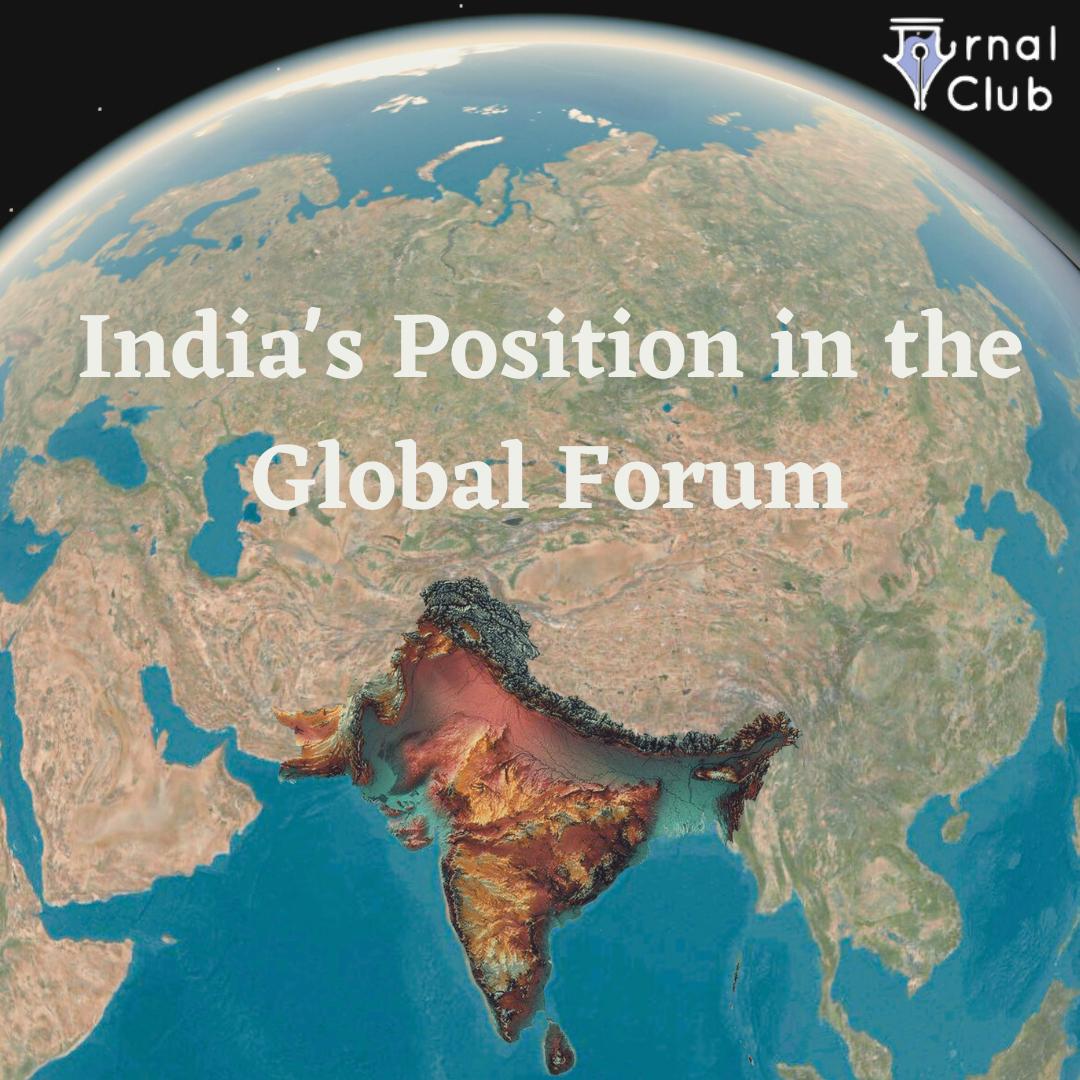
Ever since the constitution of India was adopted on 26th January 1950, the country of India has been growing steadily out of its dark history of oppression. Currently, India stands as the fifth largest contributor of the world’s GDP, ahead of juggernauts like Great Britain and Russia, jumping five places since 2014. Being ranked as an emerging eastern superpower and spending the third highest on defense budget after only the US and China, India’s presence is now felt across the world. The power balance in the East has shifted owing both to the Russia-Ukraine war and the steadily increasing Chinese influence on most of Central Asia. India is also the running favorite to become a permanent member of the UN if the UN were to ever expand its council. So how has India suddenly become more relevant than it has ever been in such a short span of time?
Granted, India provides an extremely dense talent pool in the IT sector to the rest of the world while also serving as an economically favorable base of operations for more international companies. As well as India is doing, where exactly are we on the global stage? As talented as the domestic workforce is, the key lies in the improvement of international relations by the current government and its Minister of External Affairs, Dr. S. Jaishankar. Under the Modi Government, India has visibly shifted away from the primary sector and more towards the secondary and tertiary sectors and has thus developed the country from a dependent country, to a more or less self-sufficient country. During the Covid-19 pandemic that shook the world, India exported covid vaccines to more than ninety-four countries. Among the ‘Made-in-India’ vaccines that impacted the global market, the Pune-based Serum Institute of India’s (SII) Covishield accounted for around two-thirds (66.63 per cent) of the total supplies. While countries like Italy, Japan and the US were struggling to supply their own countries, India suddenly vaulted into the spotlight as a possible Eastern Superpower. India’s diplomatic stance and no-aggression policy have also seen favorable views from the world, barring the likes of Turkey, Pakistan, and China.
India’s ability to not pick a side in conflicts and instead invite other countries to join them to tackle joint struggles has only further strengthened India’s status as a possible superpower. India strongly condemned the ongoing violence in Ukraine, and while it did not supply military aid to either side, India did supply financial and humanitarian aid to Ukraine’s citizens and also made sure to safely bring Indian students in Ukraine back home safely. India continues to retain a firm stance and a multipolar view of itself, which aims to invite other countries to join the side of non-violence and mutual growth. Minister of Foreign Affairs, Dr. Jaishankar has also rightly exposed the hypocrisy of the West when asked about India’s purchase of Russian oil, where he pointed out that Europe had to grow out of the mindset that its problems were the World’s problems. By rightly maintaining a firm stance on the global stage, Dr. Jaishankar portrayed the essence India planned to display internationally. A stature of firm yet calm power.
Having long remained silent under the Congress-led government, India showed that it was not hesitant to show aggression if threatened. The surgical strikes in Pakistan for the retaliation of the Uri attack and the stalemate in Galwan prove that India is neither going to be bullied into ceding territory nor remaining a passive bystander on terrorism. India now aims to cut off China economically with its human resource. Amid China’s growing tensions with the West, India is quick to seize the opportunity to get foreign investors to invest more in India than China. India is also focusing on increasing its military independence by manufacturing indigenous fighter planes and missiles, partially replacing the outdated Air-force of the country. Most notably, India’s nuclear-powered submarine, INS Arihant, the Brahmos missile and the upcoming TEDBF fighter jet shows India’s technological capabilities. Countries like Egypt, Argentina and even the US have shown interest in procuring the indigenous Tejas aircraft. The INS Vikrant is also set to counter China’s naval dominance in the South China Sea.
While India particularly is doing well, our neighbors are doing far worse. Pakistan is staring at an economic crisis and nationwide power outages. Bangladesh is facing similar issues, and Sri Lanka is set to default on its national debt for the first time since its independence. Nepal has suspended its central bank chief and is also facing economic uncertainty. How are these troubles an opportunity for India, which looks to try and establish more authority over China? India must now look to create mutually beneficial people-oriented regional frameworks for stability and prosperity. It is critical for India to maintain good relations with its neighbors in the wake of other geopolitical problems. According to a UN report, India is slated to have an economic growth of around 6.7% in 2024, the highest among any of the other G-20 countries.
In the forum of climate change, India has been at the forefront of driving global action. It has used indigenous technology and green resources to promote sustainability. Prime Minister Narendra Modi’s announcement to establish a National Hydrogen Mission is also noteworthy. Along with this, India has cofounded the International Solar Alliance (ISA) with France, and in doing so, is leading the global movement towards energy access and transition. The ISA already has 110 countries as members and is promoting 10GW of off-grid and grid-connected solar projects in developing countries. India’s pledge to reach net zero emissions by the year 2070 was one of the most important announcements of the COP26 (Conference of the Parties).
While the balance of power is definitely beginning to shift eastward in the wake of the Russia-Ukraine war, it is up to India to seize to the opportunity to grow and ultimately become a true global superpower. All in all, we must look past the hurdles we face and aim to achieve the full potential of our humongous human resources. If all goes well, our great country could become a global superpower as early as 2040.
 The Journal Club
Leave a comment