
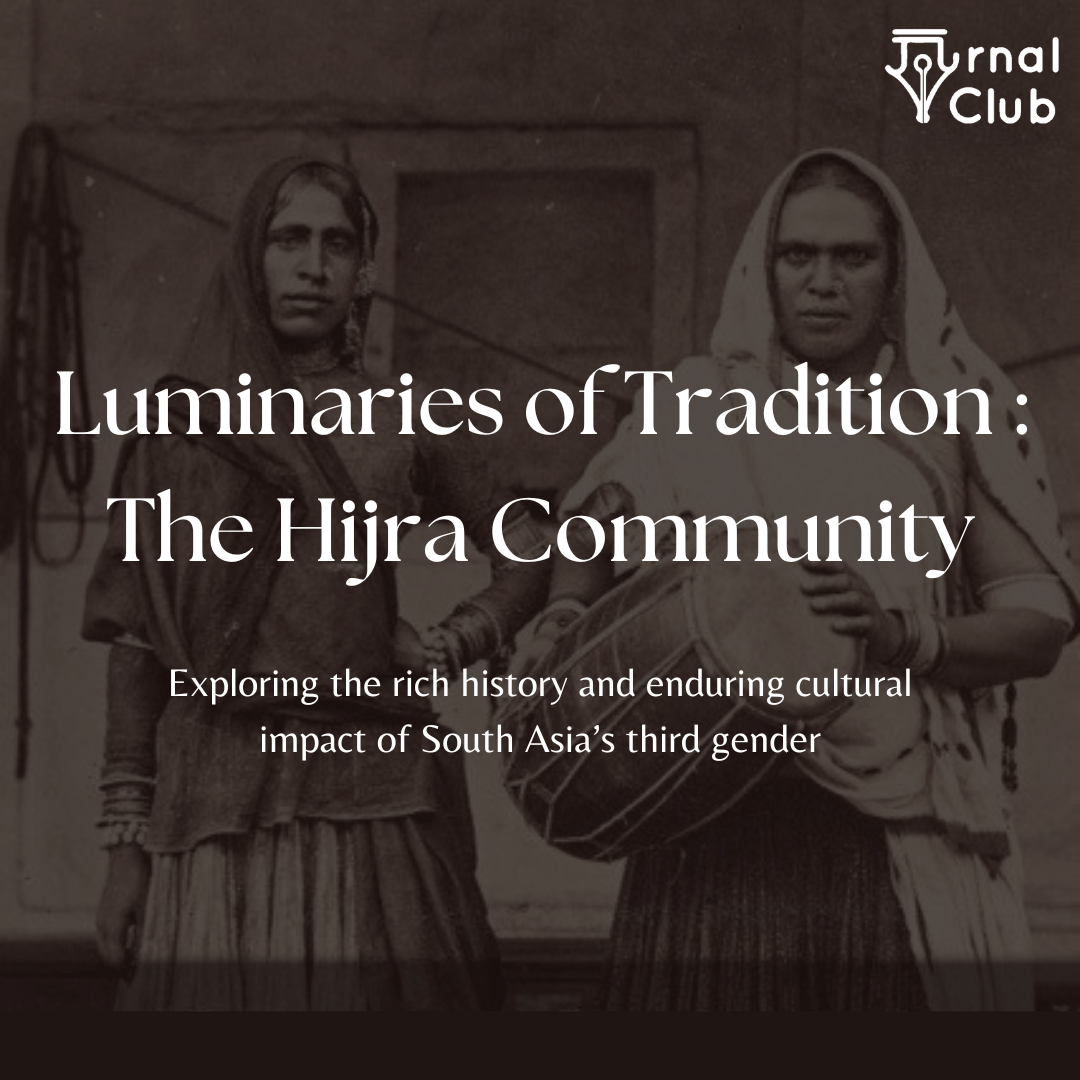
When Lord Ram left Ayodhya for the fourteen-year-long exile, all the citizens of Ayodhya followed him. At the banks of the river Tamsa, Lord Ram told all the men and women of Ayodhya to return to their homes and live under the rule of his brother until he returned. Fourteen years later, when he returned, he found the Hijras waiting for him with bated breath. He asked why they did not obey him, and they answered, “Lord, you told all the men and women to return to Ayodhya. We didn’t know whether to follow you or go back, so we waited.” They ate the same tuber root that the Lord ate in the forest, drank the same water that He did, and when He returned triumphant, the Hijras were the first to welcome him back home.
But if we’re going to talk about the Hijra community, we need to first talk about the name. Hijra. What does the word mean? Is it a slur that you’re unsure if you’re allowed to say? Or is it just a synonym for the outcast people we see at traffic lights, railway stations, and other places on the fringes of society? No.
The Hijra community wasn’t always the way we see it now. This culturally rich community was once revered and deeply intertwined with South Asia’s cultural, religious, and social fabric. In the current climate, you see them included in society only when it’s considered “socially acceptable” and required by custom—at weddings, funerals, and at the births of babies to bless them. On these occasions, and these occasions only, they are considered to have a special connection to the divine by modern society. Their presence is auspicious, but just until everyone goes home and the gathering’s done.
Contrary to common misinformation, which perhaps stems from gender nonconformity being a taboo, the name Hijra isn’t synonymous with transgender. They identify as a third gender, neither male nor female. The Hijra community lives in tight-knit communal households called gharanas, led by a gurus. This guru-shishya relationship is central to Hijra culture, with the guru providing mentorship and disciples contributing to the household.
New members undergo initiation ceremonies that often include elaborate rituals devoted to specific Hindu deities. Hijras are devoted to specific Hindu deities, such as Bahuchara Mata, a goddess associated with transgender people and gender nonconformity. Legend has it that Bahuchara Mata was a woman who was attacked by bandits. To protect her virtue, she cut off her breasts and cursed her assailants with impotence. She thus became a symbol of gender nonconformity and is worshipped by the Hijras.
According to myth, Hijras weren’t born but descended to Ayodhya from Swarglok after Lord Ram’s birth to King Dashratha. The Ardhnarishvar form of Lord Shiva is considered another form of the Hijras. The Ramayana and Mahabharata contain stories of these often overlooked characters, such as Shikhandi, who was born female but later lived as a man and played a crucial role in defeating Bhishma and securing the Pandavas’ victory.
Several ancient texts across Hindu, Jain, and Buddhist religions mention the Hijras. The Kamasutra classifies them as tritiya-prakriti (third nature) or kliba and includes discussions on same-sex relationships between men and, to a lesser extent, women. Kautilya’s Arthashastra discusses gender nonconforming people and their societal roles, including service in royal courts and other professional capacities. Manusmriti and Yajnavalkya Smriti also mention Napumsaka people, translating to “genderless,” but often interpreted as the third gender.
Jain scriptures, including the Purvas, Angas, and Agamas, refer to various gender identities and the concept of tritiya-prakriti, emphasizing the spiritual equality of all beings. The Buddhist Vinaya Pitaka, part of the Tripitaka, includes references to non-binary individuals and their integration into monastic life, ensuring they can pursue the spiritual path alongside bhikkus (monks) and bhikkhunis (nuns). The Sutta Pitaka contains stories featuring characters who are often non-binary or gender-fluid.
During the Mughal era, the Hijras held significant positions within the royal court. They served as advisers, confidants, and guardians of the harems of queens. This influence wasn’t limited to just the royal courts but extended into broader society, where they were respected and valued as performers, patrons of the arts, and members of the court.
As is often the case in our country, British rule messed things up. The British colonial administration enacted the Criminal Tribes Act, classifying the entirety of the Hijra community as a “criminal tribe,” all but putting a genocide into effect. This stigmatized them and subjected them to undue, wrongful police surveillance and harassment. It criminalized their traditional, even scripturally dictated, means of livelihood and social function, forcing them into poverty. It criminalized their very existence.
From being a community said to be brought from heaven itself at the birth of Lord Ram, to being criminals just by breathing and being, thus came the deterioration of the Hijra standing in society.
Acts such as the Right to Vote (2009) and the Supreme Court Ruling (NALSA v. Union of India, 2014), which granted Hijras the right to vote as a third gender and recognized the fundamental rights of transgender people, respectively, have tried to restore the dignity of life for the Hijras, but it’s a long way to go. There is a growing recognition of their rights and contributions, heralding a new era of inclusion and respect.
As Indian author and activist Laxmi Narayan Tripathi fittingly stated, “We have survived and thrived through centuries of discrimination and hardship. Our culture, our identity, and our spirit are indomitable. It’s time the world sees us for who we truly are—not as outcasts, but as a vibrant, integral part of the human tapestry.” This acknowledgment is not just about rectifying historical wrongs, but also about celebrating the rich cultural heritage and resilience of the Hijra community.
 The Journal Club
Leave a comment