On June 13, 2024, Aryan Sawan, a student of BITS-RMIT, had just landed at Rajiv Gandhi International Airport at 4:15 p.m. Given the harsh prices that cabs charge, he decided to hail the bus.
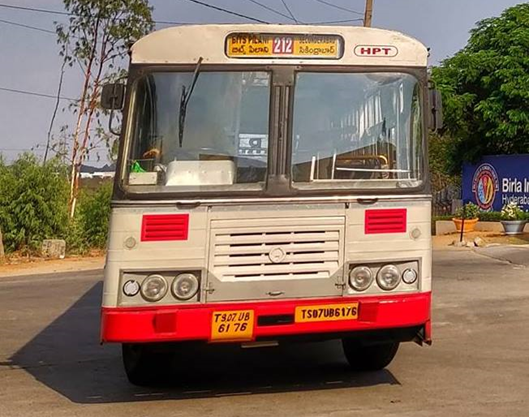
Figure 1- Picture of Bus 212 in front of BPHC gate. Source : Facebook
“I took the bus to Secundarabad. Upon reaching there, I was told that there was no bus that departed for BITS, due to which I ended up taking the bus to Thumkunta instead. However, the bus broke down in the middle of nowhere, and I was stranded, leaving me no choice but to book an expensive cab to reach the campus.”
A cab journey from the airport to the campus usually takes somewhere around 75 minutes. But it took him roughly four times that, all due to taking public transport instead of a cab.
Problems as such are prevalent in Hyderabad’s public transport system and are something every student in this city has been facing for a while. This begs the question: Is Hyderabad’s transportation capabilities meeting student needs?
A sizeable number of college students in Hyderabad are non-locals from different parts of India and their unfamiliarity with the environment are one of the few things that are taken advantage of when they enter the city for the first time.
Another student, who wished to remain unnamed, told, “Our cab driver charged us around Rs. 5000 just to make a simple journey from the airport to our hotel near BITS, while Uber was showing somewhere around 3500 but no one was accepting the trip.”
“I noticed that the airport had no metro connectivity. The only modes of transportation were cabs and buses,” recalls Aryan Sawan. This is a major issue in Hyderabad, as the airport is far from the city but there is no metro line connecting it to the city. And the absence is certainly felt, since RGIA is the 4th busiest airport in the country, handling a record 25 million passengers in FY 2023-24. Almost every major city in India with a metro system has a dedicated airport line but Hyderabad is not one of those cities. Although, there has been some progression towards the construction of an airport line.
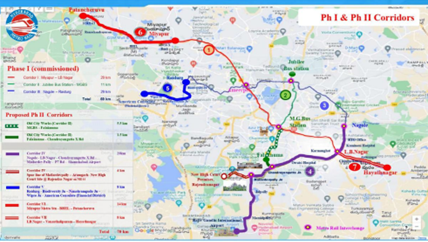
Figure 2- HMRL map of phases 1 and 2. Source: The Hindu (January 22, 2024)
Note: The route for Hyderabad Airport Metro was not decided when the map was created
Hyderabad Metro is the 3rd largest metro network in India, serving 162 million riders per year with an operational length of 89.2 km according to Larsen & Toubro Ltd. A Phase-2 of the Hyderabad Metro has been proposed with an additional length of 70 km and a Phase-3 which is still in very early development stages.
The Metro system has been praised for being on-time, with a frequency of 4.5 minutes at peak hours and 7 minutes at non-peak timings, along with affordable pricing and vast connectivity in the central region of Hyderabad. Unfortunately, the system does not reach other parts of Hyderabad.
Hyderabad Airport Express Metro is a proposed metro line that will connect the city to the Rajiv Gandhi International Airport. But it is facing challenges of its own after many changes over the initial plan took place. The government has now proposed the route to be from a new Nagole metro station to RGIA.
However, many students have felt alienated from these developments as the nearest metro stations for IIT and BITS Hyderabad are located at least 40 minutes away from their campuses. There have been no proposals for the metro to expand near IIT Hyderabad but there has been a proposal for a route from JBS to Thumkunta as part of Phase-3 Part C, but that is years away as Phase-2 is yet to start construction.
Apart from the metro, Hyderabad operates a suburban rail system called the Multi-Modal Transport System (MMTS), which served as the main mode of mass public transport before the development of the metro.
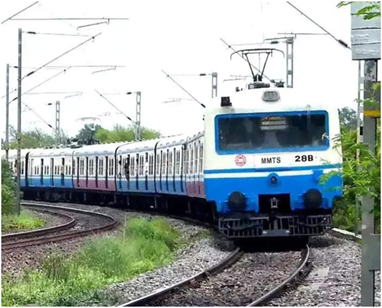
Figure 3 – Picture of MMTS. Source: Newsmeter Network
It currently faces its own issues, where a former 133 service transport facility now operates only 86 due to the effects of COVID-19 and an incredibly delayed Phase-2, which was scheduled to operate by 2018 but instead it was delayed to 8th April, 2023, a full 20 years after Phase-1. The total length of the transit system now stands at 90 km.
Added to that, MMTS also faces a limited frequency of trains and frequent delays, which, when combined with unreliable services, limited routes, and poor awareness, make it an unfeasible mode of transportation for students.
Due to such reasons, students try to avail the use of another public mode of transportation: buses.
Though it seems like a good alternative, it comes with its own set of challenges and issues. One of the major issues is the frequent breakdown of buses.
One such incident was described by Aryan Sawan:
“After a while, the bus broke down in the middle of the highway. I, along with the six other passengers, were asked to find some other means of transport. I was stranded there for over an hour until one cab driver agreed to drop me off at BITS for an exorbitant sum.”
Recent data published provides a possible explanation for this breakdown:
Around 218 buses in the Hyderabad region and 303 in Secunderabad have been in service between the age bracket of 15 years and 17 years, and nearly 900 buses are estimated to approach the scrapping threshold in a couple of years.
Another prominent issue that was mentioned by students was overcrowding in these buses.
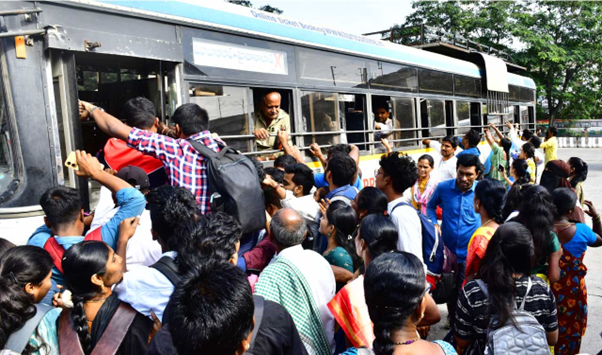
Figure 4- Overcrowding in a TSRTC bus. Source: The Hans India
While overcrowding has been a prevalent issue, a reputable news source has labelled a recent increase in crowds on the Mahalakshmi free bus travel scheme, a noble scheme which provides free bus travel facility for female travellers among other benefits for women.
Unfortunately, the Telangana State Road Transport Corporation (TSRTC), faced a huge increase in ridership in a system that was already suffering from overcrowding, due to a low number of buses available for such a huge population.
According to the corporation, an astonishing 3 crore women travelled in the buses within 11 days of the implementation of the scheme.
Data suggests that the government is unable to expand the current fleet of buses to meet current and future needs as the TSRTC was beset with massive losses in FY 2021-22, recording a loss of 1,986 crores and a negative net worth of 9,240 crores. However, the corporation has announced plans to introduce 80 new buses in response to the increased ridership due to the Mahalakshmi scheme, a rollout that began on December 30, 2023.
They also announced a significant venture – an acquisition of 1050 new advanced diesel buses to the fleet at a cost of Rs. 400 crores. Still, TSRTC still struggles to turn their high ridership into profits, especially due to ‘zero tickets’, on which the organization spends Rs. 350 crore every month, with the total outstanding amount at Rs. 1400 crore as of March 2024.
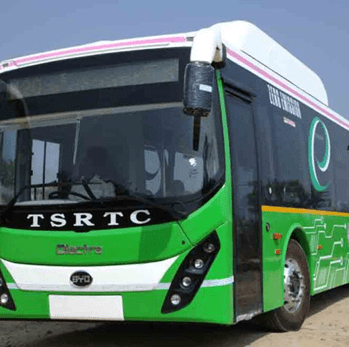
Figure 5- Pushpak Airport Shuttle. Source: AbhiBus
On the brighter side, Aryan describes his experience in the Pushpak Airport Coach as “a delightful experience.” Pushpak is a special electric AC bus service provided by TSRTC, providing connectivity to the airport from multiple points in the city. “I spent only a small amount of money on comfortable travel.” Aryan recalls.Additionally, TSRTC recently ordered 550 e-buses from Olectra Greentech Limited, out of which 500 are intracity e-buses. TSRTC Managing Director V C Sajjanar stated that they hope to make e-buses available throughout Hyderabad by March 2025.
Yet the issues mentioned undermine these initiatives as mere baby steps towards a brighter future for bus transportation in the city.
Another common mode of transport that students use in the city are autorickshaws. As seen with other transport systems, it comes with its own demerits as well.
Many metropolitan cities in the country use meters in their rickshaws. However, this is not the case with rickshaws in Hyderabad. Some students even mentioned that auto drivers allegedly charged them extra by taking advantage of their unawareness of the city.
“I had just arrived at the city and was surprised to find no meters in autos outside the Secunderabad railway station,” A BITS student from Navi Mumbai recounts. “As a result, I was taken advantage of and charged Rs. 250 for travelling merely half a kilometre.”
This is not unique to the Secunderabad railway station, as BITS Hyderabad itself has an auto monopoly outside the main gate, an issue that was deeply studied in detail in the article: The Monopoly: feat. Campus Auto Walas by the Journal Club.
A similar situation is seen in the cab market in Hyderabad. Apps like Uber and Ola are a platform for nasty practices where the driver will sometimes accept a ride but won’t pick up the customer unless paid more than the promised fare.
These problems that are mentioned are not just restricted to BITS itself. IIT Hyderabad is yet another major institution in the city that suffers from connectivity issues. With the closest metro station being Miyapur, which is an hour away, it has an even more dire situation than BITS Hyderabad. “Since our institution is on the outskirts, there is barely any transportation available except for a few autos that charge an exorbitant sum of money,” said Aditya Srivastava, a second-year student at IIT.
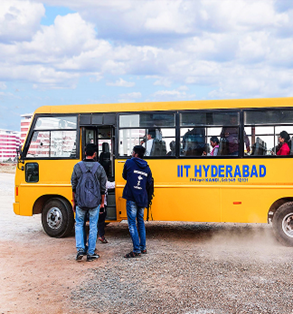
Figure 6- Bus service provided by IIT Hyderabad.
Source: http://www.iith.ac.in
In contrast to BPHC, IIT Hyderabad operated a shuttle service until recently, which provided transportation to Miyapur for only Rs. 60, a very convenient option for students. Unfortunately, the institution stopped Miyapur routes in January 2024 and currently only drops students off at Patancheru for Rs. 30, which is halfway to Miyapur. Not only BITS and IIT Hyderabad, which are in the outskirts, face such issues, the students in the central areas also suffer overcrowding and infrequency of buses, auto, and cab issues, and the metro still stands largely incapable of providing a wide connectivity to the 3rd largest city in the country by area and 4th largest by population.
In conclusion, Hyderabad’s public transportation is currently undergoing significant changes, many have been for the better but many have also been for the worse. With the population boom in Hyderabad in recent years, it is obvious that the city will face an arduous challenge to accommodate their transportation needs. However, it is not hopeless as the city is already trying its best to improve. For instance, TSRTC may be struggling but they have introduced more buses to their fleet now than they have done in a long period of time, or Hyderabad Metro already beginning work on Phase-2 despite having been launched in 2017.
Unfortunately, these developments are years away and many of us will not be here to enjoy the benefits they would bring. All we can do for now is wake up early and hope to catch the bus to begin our commute through the chaos that is Hyderabad’s public transport.
 The Journal Club
Leave a comment