

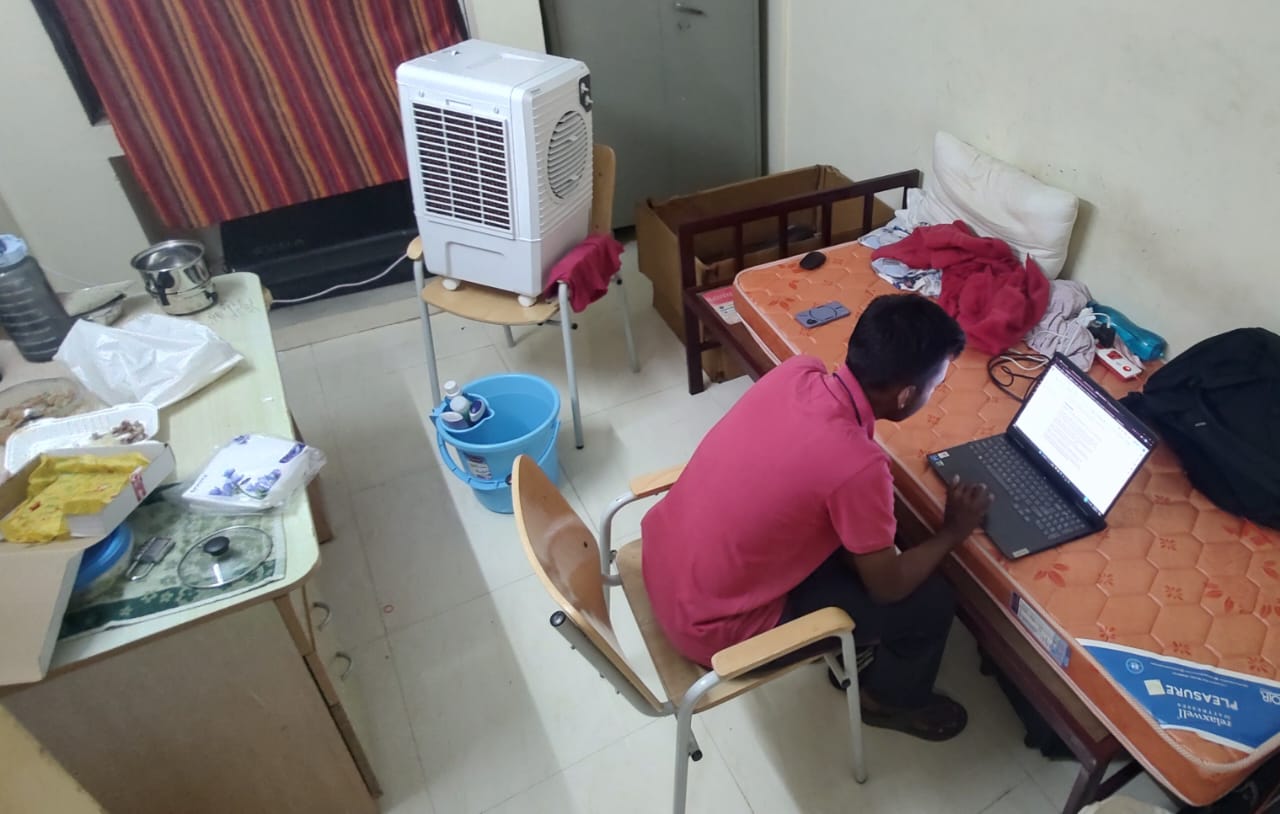
Fig. 1 : Student using a cooler during the heatwave for respite.
The summer of 2024 has brought record high temperatures to Hyderabad, and for people like Kalash, a second-year student in BITS Pilani Hyderabad, the sweltering heat has turned daily routines into grueling ordeals.
As Kalash, an Electronics and Electrical Engineering (EEE) student, trudged to class, he couldn’t help but feel like he was in an old energy drink commercial, where the sun was cartoonishly hot, relentlessly sapping his energy.
The journey from his stifling hostel room to the mess hall for lunch was particularly agonizing, as the packed dining area only aggravated the oppressive heat. Kalash had developed a slow, deliberate tread to conserve energy during this unbearable season.
Oddly enough, his only respite came in the form of attending classes, where the air conditioning provided a rare relief. Even the library, with its minimal cooling, offered some comfort compared to the other common areas.
The hostel common rooms were overcrowded, their air conditioning rendered ineffective by the sheer number of students seeking refuge there. The stench of so many people’s sweat in one place only added to the discomfort, and finding a suitable place to sleep had become a near-impossible task, particularly with comprehensive exams looming.
Kalash joined BITS Pilani Hyderabad as part of the 2023 batch, and like his peers, he received the email on May 3rd, three days before the end of semester exams, from the administration announcing a strict ban on personal coolers. Further, on May 4th, they received another email stating the reasoning behind the ban.
There were two reasons provided by the management: the excessive consumption of electricity and water, and concerns over the potential for overloaded transformers, especially with upcoming general elections making it unlikely that help would arrive promptly from the municipality and the government in case of a breakdown.
“I understand the reasoning behind the ban,” Kalash admitted, wiping sweat from his brow, “but it feels like we were being punished for something beyond our control. The heat was unbearable, and the common areas were too crowded to be of any use. Studying for exams in these conditions was next to impossible.”
A fellow student, Siri Medishetty, a freshman, echoed his sentiments. She remembers that during the times without the cooler, she was “unable to read with concentration”. She believes that the decision to ban coolers, although seemingly reasonable on paper, made her and others’ lives miserable. She recollects with a wry smile, the scorching touch of the mess’s air, as if she were inside a furnace, without any escape.
Some, like Aadesh Oswaal, a first-year student, had found ways to adapt, though not without difficulty. He said that he had started spending a lot more time in the library, even though it wasn’t much cooler than the hostels. Although it’s quieter and less crowded, it’s still far from ideal, he said.
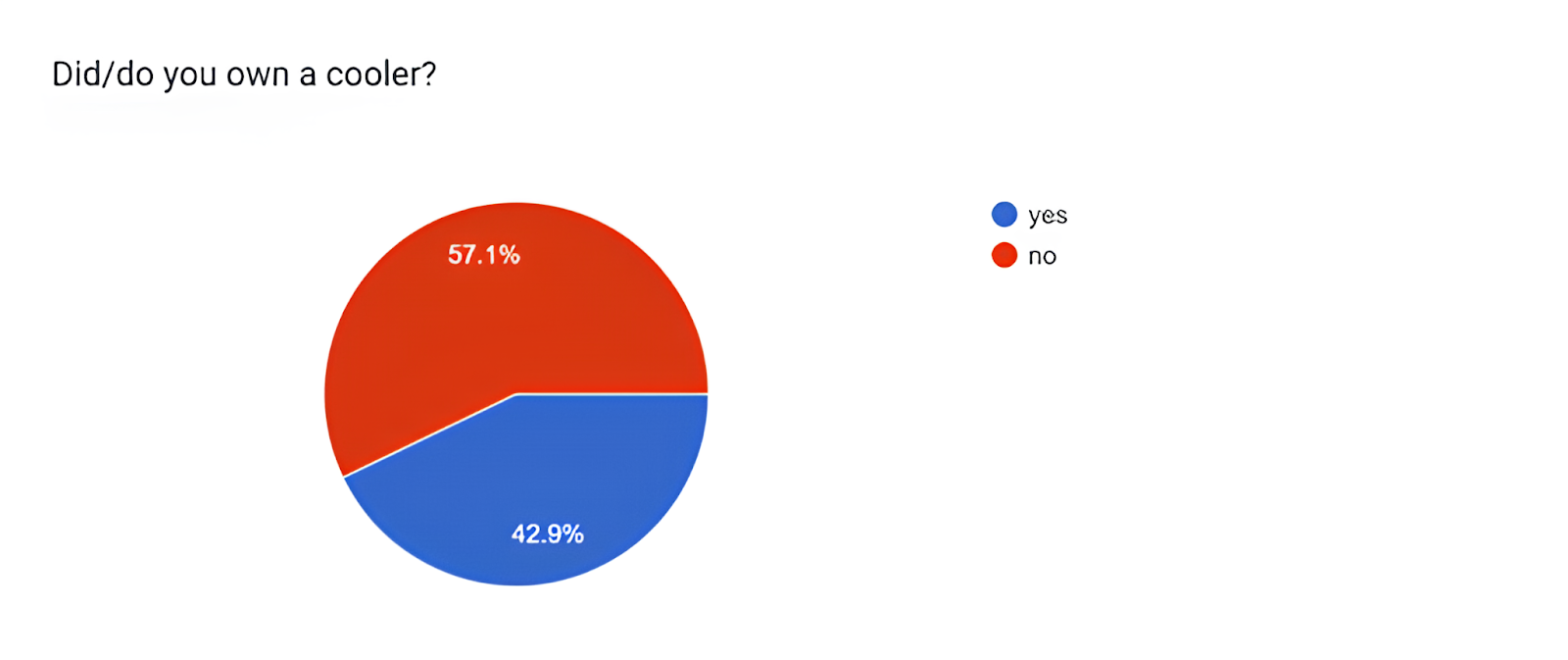
Fig. 2 : Statistic from a survey showcasing the percentage of people who own and don’t own a cooler.
He argues that he along with his fellow students are paying a lot of money to be in the institute, so it’s frustrating that they couldn’t even have a comfortable place to study and sleep.
It’s not just the boys, but also the girls who have faced problems.Yuktha Ratna Puvvadi, a second-year student, shared her complaints.
“No place was vacant enough to have good air conditioning. Neither library nor classes were open 24/7 nor could we stay out for the whole night. We faced health and immunity issues, especially in girls hostel” where she said that everyone felt an “increase in body temperature due to hormonal phases” and thinks that coolers were vital for living during the heat.
She is an asthma patient. The heat had made it hard for her to breathe, she says. She used to rely on a cooler to keep her room at a manageable temperature, but after the ban, she had no choice but to “suffer”. “It was affecting my health and my grades.”
Voicing similar concerns, Kritika, another first-year student recalled how she “used to get rashes because of the heat” every night, and how she had to get up in the middle of the night “around 2-3 times to pour water” on herself.
“And the fact that boys were using coolers at that time was even more annoying.”, she adds.
Temporary Solutions and Challenges
In response to the overwhelming discomfort expressed by the students, the administration had implemented several temporary measures. Five open classrooms in the new academic block with air conditioners were made available for students to study until 4 AM.
Additionally, the library hours were extended until 2 AM to provide more time for students to access a cooler environment. As a further relief, air conditioners were installed in the common rooms of the hostels.
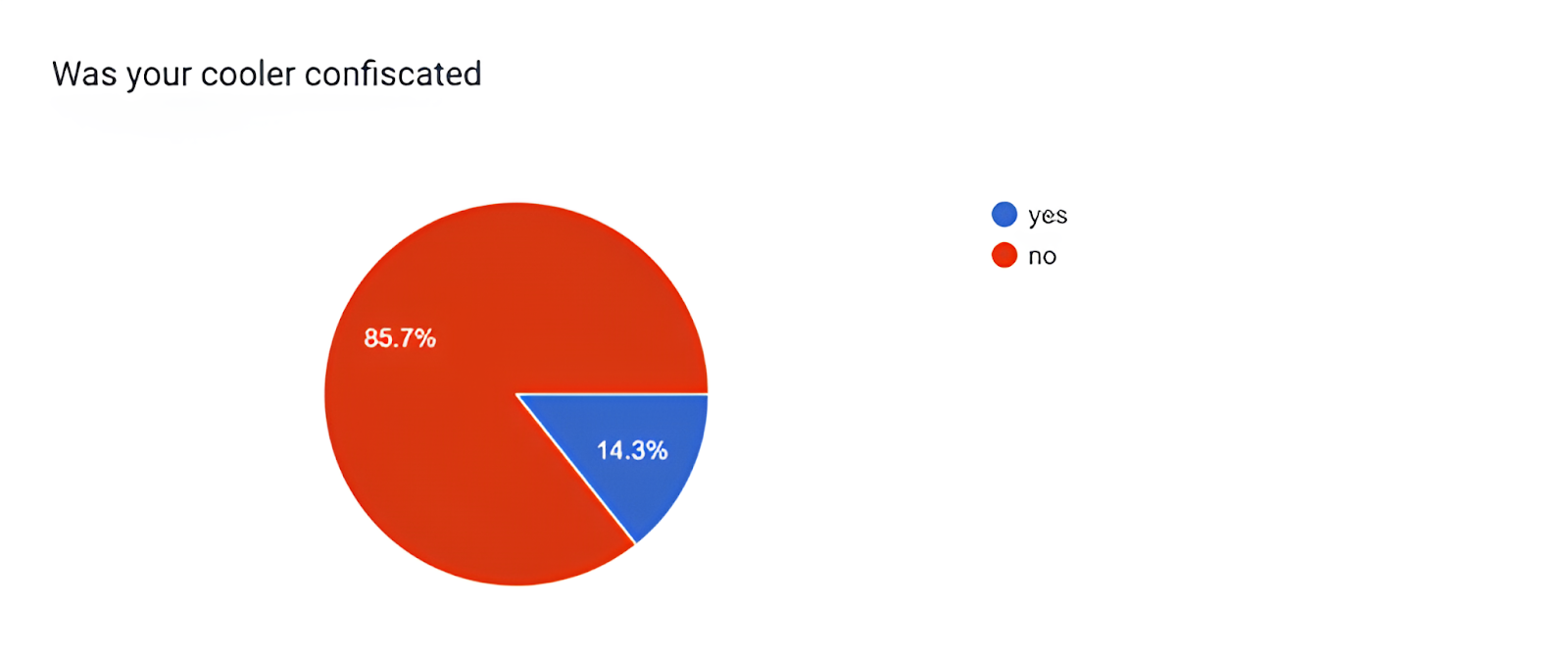
Fig. 3 : Statistic from a survey showcasing the percentage of people that own a cooler whose coolers were confiscated.
Aadesh remarked, “It helped for sure but still would have preferred a room” as he reasons that academic buildings and the library are far away from his room.
Despite these efforts, a quick small survey revealed that of 42.9% of students who had a cooler, 85.7% of them didn’t have their coolers taken, and had continued the usage of personal coolers despite the ban, while about 14.3% reported having their coolers confiscated by the administration.
Staff’s Perspective
“If 3000 students were to buy a 10 liter cooler, imagine the amount of water that would be used…” Mr. Muthukrishnan, the senior maintenance manager of the BITS Hyderabad estate commented.
On the point of the water consumption, the Chief Warden, C.P Kiran further noted that the municipality supported 99% of the water used by the faculty and the students.
“If a crunch like Bangalore comes here, we’re gone. (If) Rains are low. Obviously where we’ll get water.”
The email sent to the students had all the information needed, the electricity consumption would be too high and the transformers wouldn’t be able to support it. Moreover the water consumption would be beyond what “The municipality could support.”
For the chief warden it was a dire circumstance too as he explained that most hostels are too old and their infrastructure, such as the wiring, cannot support the increased electrical consumption that would result from the use of coolers.
“…Electric slabs are there. Wherever we are registered, they charge us x amount, even if we cross 1 unit above that, we will be charged 20% of our bill. ” Even with the college ready to pay for the electricity, the transformer proved to be a barrier.
C.P Kiran mentioned a blackout in BITS Goa, where the transformers had overloaded, which had caused the students to take classes and give exams in the library as the generator was used throughout the year due to the amount of time it took to replace the transformers, shedding light on the amount of time it would have taken and the inconveniences that the students and staff would have faced had the transformer in BITS Hyderabad overloaded. Especially with the general elections around the corner at that time which would delay any help from the state.
“Academic buildings all are covered with solar panels. We’re maintaining them. But that may not be sufficient. We cannot keep so many solar cells that will supply to entire campus
any new buildings that are coming up are covered with solar cells. But the community buildings have solar powered water heater” He further mentioned.
He mentioned that they did not fine the students whose coolers were confiscated despite the email saying they would have to pay 5000 rupees saying they will do so now.
Coping Strategies
In the face of these challenges, students had been forced to come up with their own strategies to cope with the heat. Some had taken to sleeping on the floors of the air-conditioned common rooms, while others had taken to crawling to the library and air conditioned classrooms.
A group of students had even started complaining through multiple emails to the Student Welfare Division (SWD). “We were not asking for much,” said Dron Pande, one of the first-year students.
“Just some relief from the extreme heat. We were willing to compromise, maybe limit the use of coolers to certain hours or have a rotating schedule. Anything to make it a bit more bearable.”
Despite these efforts, the administration remained firm in its stance. “We understand the students’ concerns, and we’re exploring alternative solutions,” Prof. Kiran assured. “But the ban had to remain in place.”
The consequence of letting people use coolers was much worse “once we are permitted, I can’t control who’s using.” which could have led to the load tripping.
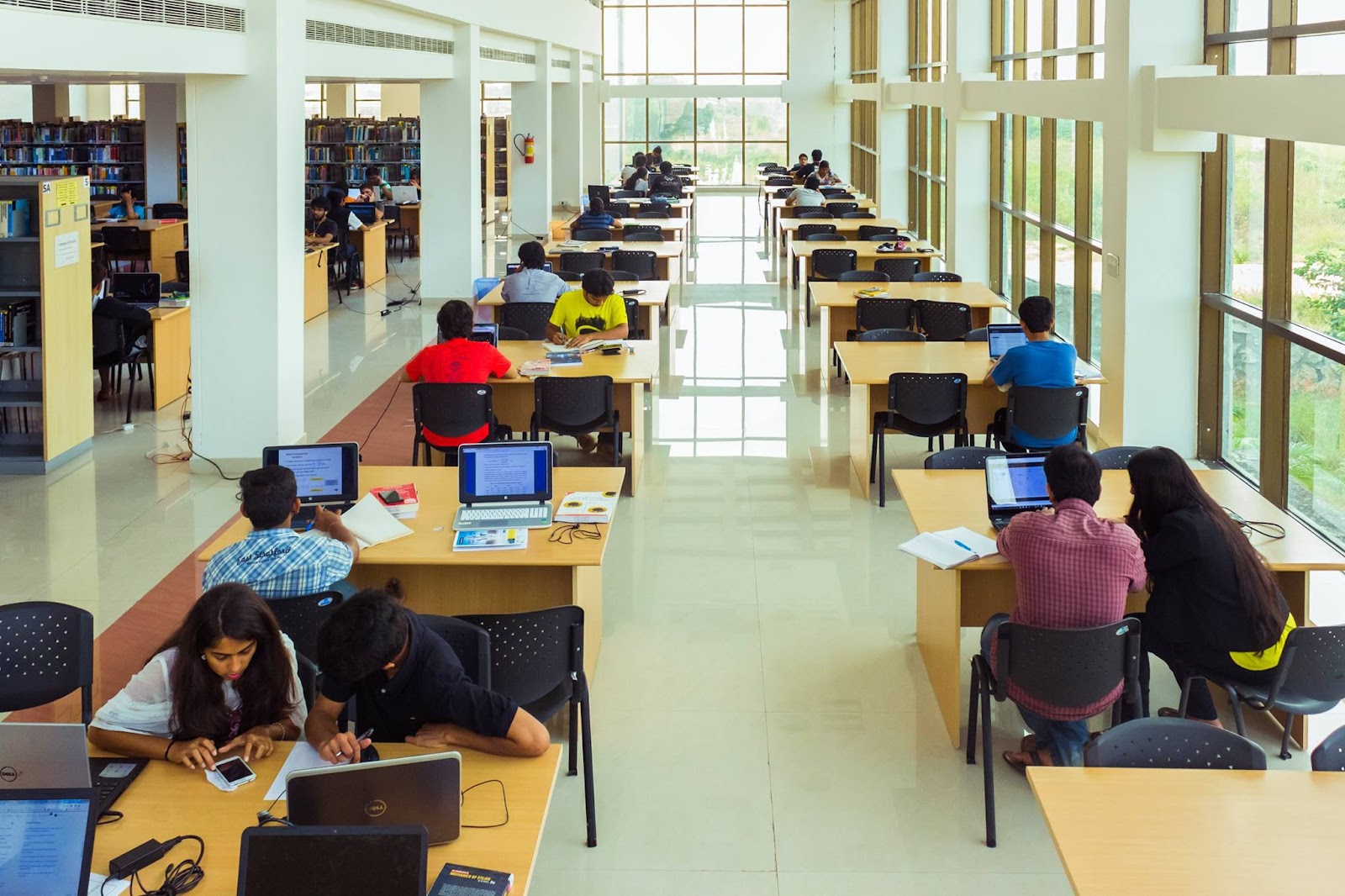
Fig. 4 : Students intensely studying at the library. Source: Photography Club, BITS Hyderabad.
Long-term Solutions
Looking ahead, the administration is considering several long-term solutions to address the heat issue.
“We need better cooling systems, which we are trying to implement. We are planning to apply for the upper band, but we need to check with the existing wiring system and transformer. With ACs in common rooms, I am sure students can find some relief in the upcoming summer. ” said C.P Kiran. “If it is allowed to use the cooler, some extra amount will have to be paid.”
In the meantime, students like Kalash had continued to endure the heat, hoping for some relief. “I just kept telling myself that it won’t be like this forever, it’s only till the compres are over.” he said with a weary smile. “We got through it, one way or another.”
The cooler ban at BITS Pilani Hyderabad had undoubtedly added to the challenges faced by students in an already demanding academic environment. As temperatures soared and tempers flared, the debate over the ban had continued to heat up.
Kalash had not found much relief in knowing that the situation was temporary, as he was counting the days until the comprehensive exams were over so he could go home.
For some students, even this was only a brief respite, as many had to return for the summer term. The hope remains that the administration will implement long-term solutions to make life on campus more pleasant in the upcoming years.
CREDITS: Yugantar Rana (2023), Jagannathkrishnan Nair (2023), Prateek Chitalkar (2023)
 The Journal Club
Leave a comment