
Over the years, the Internet has evolved into a home for various spaces and communities. The worldwide COVID-19 pandemic made it practically impossible for one to live without an online presence of any capacity. This strong, inescapable relationship with the online atmosphere has too many impacts to explore exhaustively, but one of them is the fostering of online bigots, who continue to thrive even today. These people may belong to online communities that confidently spread hateful, often violent, ideas through sexist, racist, homophobic, or transphobic content. Their agenda largely promotes misogyny and anti-feminism in response to the changing discourse surrounding women and equality going on for years now. Its propagation, however, is in more than one form.
In mainstream media, bigotry masquerades as jokes, irony, and humour. Many major theories that can explain this style of humour have evolved over decades of scholarship: the disparagement theory suggests that humour is derived from seeing the misfortunes of another, the incongruity theory lies in a surprising punchline to an unexpected set-up, and the relief theory explains jokes about taboo topics as a way to release psychological tension.
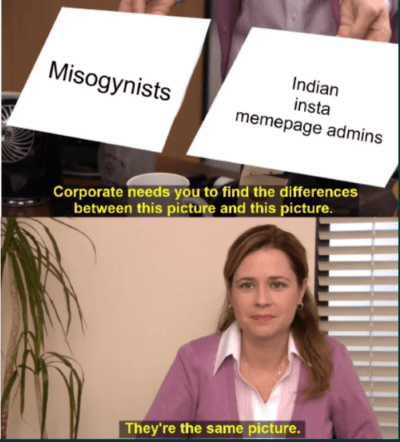
‘Dark humour’ has become a widely used umbrella term, mainly because it creates a free pass— rather, an excuse—for offensive content to be circulated without batting an eye. One cannot say they haven’t come across an Instagram reel that “jokingly” expresses hatred against fat people or is highly pedophilic in nature, and the response to it was not unwelcoming at all.
Now, this type of propagation is dangerous, because participants may be unaware that this “humour” not only functions as mere “entertainment” but also normalises the existence of its underlying message. By passing a problematic joke as “just a joke” and nothing more, viewers end up diluting the severity of the issue being joked about. The joke can target a specific stereotype about a class of people, or it can make generalised statements about their characteristics and behaviour. These kinds of memes seek to position the class within unequal relations of power, or further a discriminatory ideology.
Insensitivity remains a predominant theme among both content creators and interactors online. While a fraction of participants are fully aware of the sensitivity a topic requires and simply choose to hold themselves above “being woke”, not everyone wishes to be insensitive. The meme about sexually assaulting someone or assuming every Muslim is a terrorist might not be made with the full weight of the matter in mind. It is just quite easy to make a joke when you cannot be affected by the issue at hand and instead call the offended a “snowflake”, a derogatory term used to call the offended overly sensitive within social and political context. As a consequence, the space is populated largely by cisgender straight males, who are often in an undisturbed position of privilege.
The ‘manosphere’ is a term coined for a community, usually present online, sharing the ideology that in a society where they are victims, women are to blame for their troubles and that feminism is regressive. It takes everyday biases and amplifies them into full-blown theories and conclusions, affecting impressionable lurkers who encounter them online.
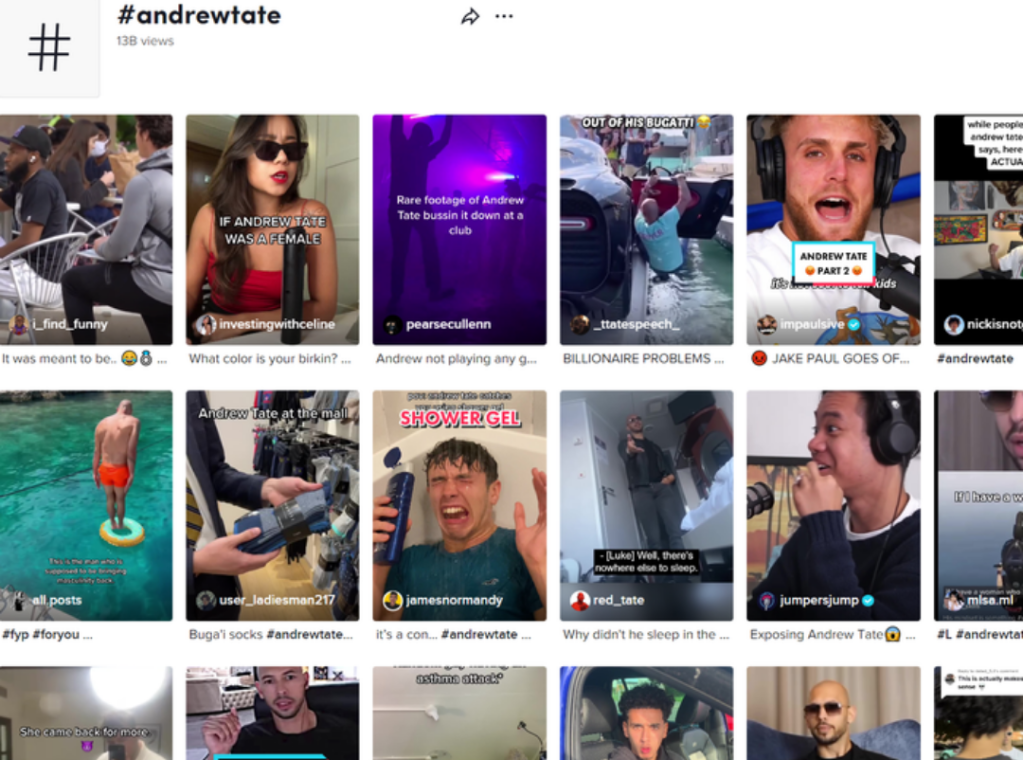
This brings us to another mode of propagation, which is rather direct and proven to be quite effective. Famous figures like Kanye West and Elon Musk, whose followers are ardent to begin with, endorse neo-nazism to their large fan bases rather confidently. Andrew Tate is the face of those influencers who use pseudo-science to justify male supremacy and produce narratives that align with the view that everyone else is inferior. While Tate has gained reach for all his content on platforms such as Instagram, X, TikTok and Telegram, the focus is given to short video clips of his speeches. This is because the snippets are often crassly-worded problematic takes used as click-bait; the pure shock value facilitates an entry point into his content.
The framing of acquiring wealth, physical strength and power as central to masculinity plays into many of man’s insecurities, whether about their career, relationships or their bodies, drawing them in. Their conversations put down anything that is considered feminine, like being vulnerable, crying or even apologising to someone. ‘It’s not racism, it’s pattern recognition’, ‘Women are intrinsically lazy’ and the 80/20 rule are takes that justify prejudice, and make them feel better about being objectively terrible human beings. It should not be surprising that Andrew Tate was indicted in 2023 for human trafficking and rape because acting on his seemingly surface-level opinions can only lead to such heinous outcomes.
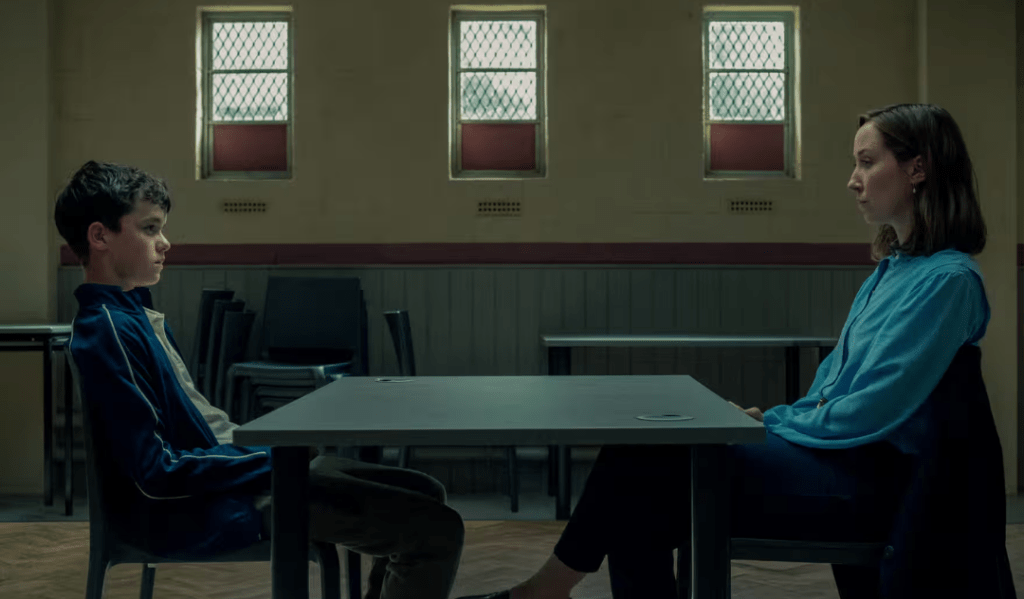
A recent initiation of conversation regarding this was the British TV series ‘Adolescence’, which gained worldwide attention, about toxic masculinity developing at a young age and the heavy influence of online content on one’s personality. It highlighted the existence of ‘incels’ (involuntary celibates) and the need to moderate content consumed by growing children. More and more discussions are being had about stigmatising locker-room talk and negativity towards the LGBTQIA+ community as well.
It seems that the corner of the Internet you spend your time on can actually influence the worldviews that shape your character. In 2015, the American Psychological Association released an official statement that frequent interaction with toxic video game communities can reinforce aggression and anti-social behaviour. Meanwhile, the fashion sphere can push upon judgmentalism and low self-esteem due to unrealistic beauty standards. In short, any interest you have or want to develop can be nurtured by this infinite maze. One Google search about how a dead body is disposed of can lead to the algorithm sending all sorts of serial killer-esque articles and videos your way over the next week.
The vast, capitalism-driven Internet does not make it easy for you to choose the right way to be informed about the world and what it has to offer. As major consumers, it is important for our generation specifically to be aware of the kind of content we are consuming and the agenda behind it. It is difficult to moderate the tsunami of information being spread every second: media literacy–the ability to gauge the accuracy, reliability and bias of content–is becoming increasingly vital today for all ages of folks.
Now, the blind consumption of online media can lead to the confusing resurrection of a disgusting racial slur used against Black people dating back to the sixteenth century by the suburban youth of India simply to refer to their friends, or it can result in multiple cases of misinformation fueling an ongoing war between opposing neighbour countries. The choice is up to you: how do you want to let the Internet affect you?
 The Journal Club
Leave a comment