
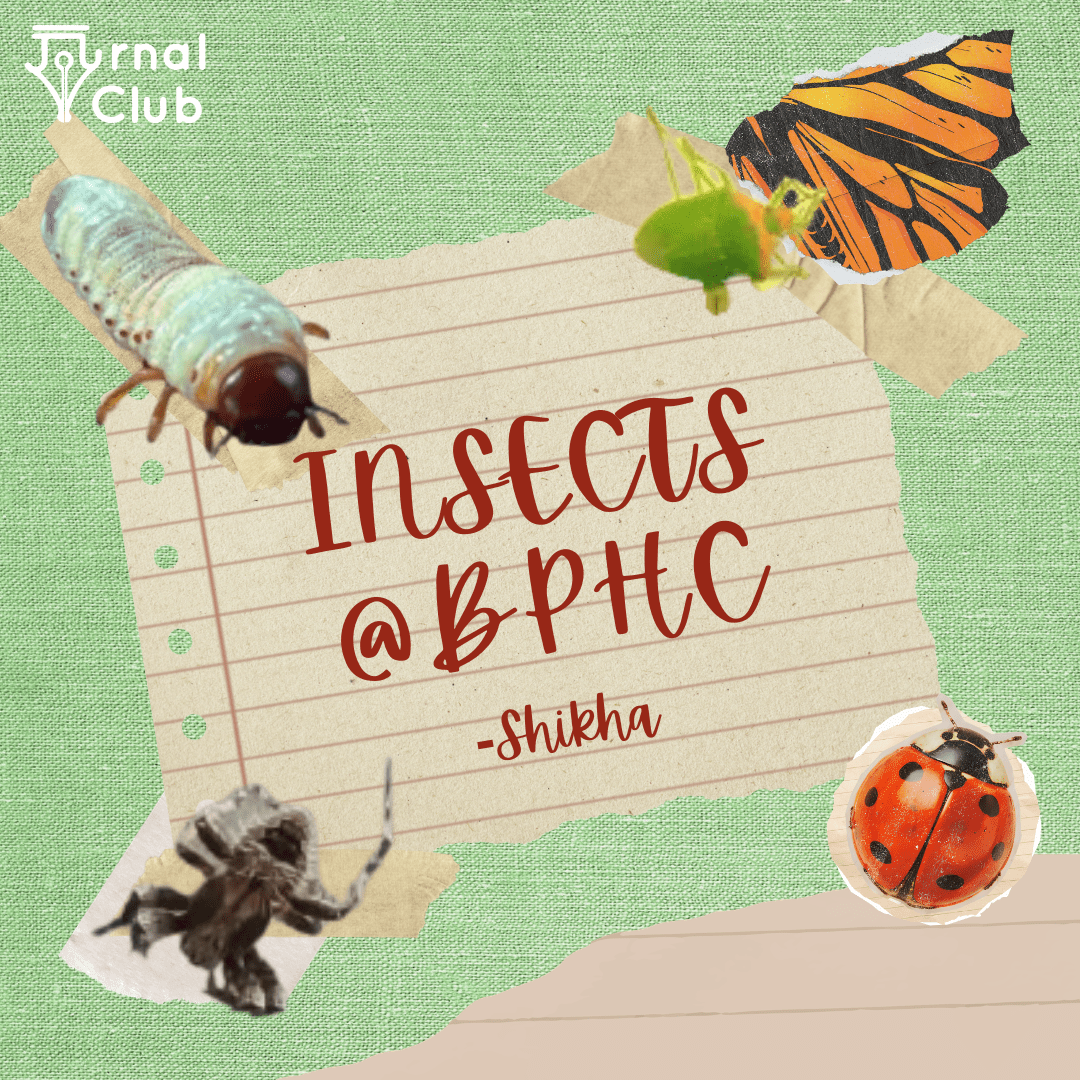
It’s no secret that our campus harbours an entire ecosystem of plants, bugs, and reptiles alike. Most of us walk on the road at night, constantly praying that none of them jump onto our foot and claim us as their next terror target. Despite our distaste (or interest!) in these creepy crawlies, they are an essential component of our campus. You’ll find bugs crawling on the pavement as you move into your hostel for the very first time and scuttling in the grass when you throw your cap high up in the air. These bugs are continuously going through the cycle of life while most of us end up ignoring them and potentially trampling on them. I find watching these insects go about their little lifespans very fascinating and have compiled a brief but informative list of insects that have been spotted at various points on our campus.
First are the ones commonly spotted in our hostel rooms. Larder beetles are a very common spectacle, which you would mostly spot on the walls or in the washrooms. This is because they love moisture and are constantly searching for carcasses to feed on. These humid spots also provide a perfect place for them to incubate more eggs. Spotted orbweavers are a very common breed of spiders you may spot around you. They don’t have a particular preference for a habitat like larder beetles do, however — they are highly adaptable and thrive in virtually any space they find. Fun fact, they are also called “Hello Kitty” spiders because the white spots on their backs form a pattern that resembles said character.
Camouflaged insects are also quite common on the campus, although you might not notice them at first glance. Certain species of katydids, or bush crickets, may just look like a fallen leaf on the ground. This is because their entire body is a flat exoskeleton that has a hue and pattern that mimics the look of a leaf. The name “katydid” comes from the sound they make when they rub their wings at night — it makes a series of noises that sounds like “katy-did”, “katy-didn’t”. Did you know that these crickets are edible? Katydids are considered delicacies in places like Nagaland, Southeast Asia and parts of Africa.
Some moths have designs on their wings that resemble leaves as well. Imperial moths are remarkably large moths (almost 7 inches in wingspan) with a fuzzy body and large yellow wings with brown spots on them, designed to resemble yellow leaves. Oleander hawk-moths have a spotted design on their back that resembles military camouflage. A different group of moths have light brown wings with jagged edges that resemble a dried-up leaf. Stink bugs have a shield-shaped back that changes colours based on the environment they are in. This sort of masquerade mimicry is very common amongst insects so as to not be eaten by birds and other predators. The beauty of nature, am I right?
There are some insects that prefer blending as much as they can into the environment, and some that do everything to stand out. Jewel beetles are a very mesmerizing species of beetles, their signature feature being the metallic shimmer of their bodies. This is caused by a phenomenon called structural coloration, where microscopic textures on their shells reflect certain frequencies of light at different angles. Due to their unique colour, the shells of these beetles are harvested to make jewel beetle jewelry.
Scarab beetles are one of the most diverse species of beetles and are found all around our campus. Some classifications of this species include the iconic dung beetle, flower chafers, rhino beetles, and chafers. Flower chafers have colours similar to the flower they like to feed on. Rhino beetles have horns that resemble a rhinoceros. Rutelinae are a classification of scarab beetles that resemble jewel beetles but are not from the same family of beetles. Jewel beetles come from the Buprestidae family, although both families are known for their striking metallic colours. The larvae of scarab beetles can also be seen crawling around campus. They have a white body with a round crimson head at the front. The first time I saw one of these, I was very spooked because they slightly resembled the look of a Mongolian death worm.
These insects are not just a part of our ecosystem; they’re the reason it keeps going. Cleaning up after remains, acting as pollinators, maintaining the soil — these are just a few functions of theirs. Coexisting with the tiny inhabitants is what makes our campus life so much more interesting and enriching. Next time you find an intriguing bug out in the wild, maybe take a picture and save it in your cool bug collection. You might end up discovering a whole new world you were initially unaware of.
 The Journal Club
Leave a comment