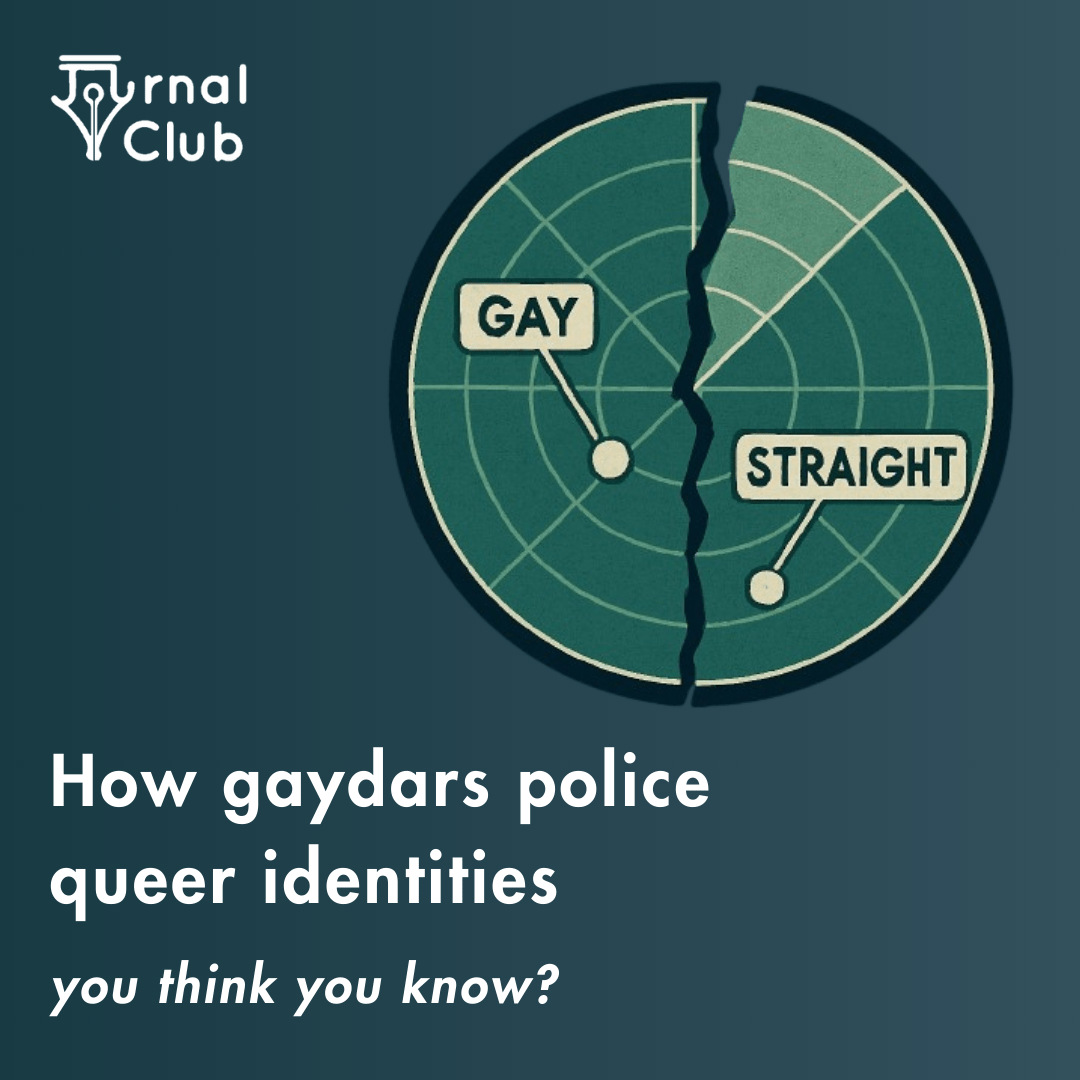
You think you know?
I’d known since I was 12 that my sexuality was unconventional. Unfortunately, I also happened to be stereotypically “gay” in my mannerisms, though I wasn’t aware of it. I didn’t even have the terminology to describe to someone the way I felt until much later. Everyone around me somehow seemed to assume my sexuality long before I realised it myself. I first heard the word “gay” a few years later—along with all the weight it carried. In a country like India, where queerness is still widely misunderstood, the fear of being called out as anything but straight can be suffocating. I quickly learned that masculinity didn’t just mean strength; it was a shield. Speak too softly, dress too well, or dislike cricket, and suddenly, there’d be questions. What’s worse than being called slurs is being called “different”. Different meant whispers. Different meant suspicion. Different meant you had something to hide.
Even those who have come to terms with the fact that they’re queer might still try to pass as straight out of fear of how they’ll be perceived. A lot of people believe that their survival in this country depends on blending in with the crowd; putting on a show and performing a heteronormative version of masculinity or femininity to fit into what they think society calls the norm. The idea that someone else could just “know”- that gaydars could strip you of your ‘cloak of invisibility’- feels terrifying rather than affirming. This fear of being seen before you’re ready makes the idea of ‘gaydar’ feel less like a sixth sense and more like surveillance.
The term ‘gaydar’ is a blend of the words ‘gay’ and ‘radar’, and it generally refers to the ability to intuitively assess someone’s sexual orientation. Back in the 1980s, when the word first came about—before the internet existed—queer people had to have ways of identifying one another. Safety was paramount. Coming out to the wrong person due to a misjudgment could be a life-altering mistake. The severe repercussions that someone would have faced if they were pointed out to be gay led to the idea of “coming out” itself being associated with danger. In 1981, the CIA released a three-page memorandum on how to recognise and single out homosexuals during an investigation, perhaps for the purposes of blackmail. This only speaks to the level of scrutiny that queers faced back then. Since openly discussing one’s queerness was evidently dangerous for their survival, the queer community came up with coded ways to recognise one another without letting anyone else know. This included using certain phrases or subtle indications during speeches referencing the community that only people within it would understand. Certain social cues and even fashion choices like wearing earrings on a specific side, or of a specific color, served as signals among queer people. Gay bars and pubs became safe spaces where people would gather to discuss ways of remaining discreet while still staying in touch with each other. This learned skill that was born from necessity was the original definition of gaydar— not an inane ability to recognise mannerisms. It was about finding family through defiance in a world that refused to acknowledge your truth.
What meant so much in the pre-Internet era has now been reduced to a socially acceptable label for stereotyping. Unless you believe that everyone has a certain aura surrounding them that makes their orientation obviously visible to the world, when you use the term gaydar, you imply that you have a set of preconceived notions as to how gay people act. It’s an assumption dressed up as intuition. People often treat it like a party trick, “I knew you were gay the second I saw you!” While this might make the person proud of themselves for guessing someone’s identity, it can be terrifying for someone who’s closeted. Most people look for clues that they think associate a person with queerness, jump to conclusions, and call it ‘gaydar’ as a way of justifying their stereotyping.
Being on the other end of this stereotyping could mean something different entirely. Queers often feel like they’re being watched, not because they’re self centered, but out of fear that someone will figure them out before they even have a chance to figure themselves out. This kind of hyper-awareness tends to push people into overcompensation. Almost every coming out video that I’ve watched on YouTube has one thing in common: they’d all changed at least one aspect of their personality just to be left alone. Many of them consciously tried to modify their behaviour by changing the way they act and talk and the kind of media they interact with so as not to stand out among their peers. It’s almost as if, instead of developing your own personality traits and figuring out what you like, you’re studying heterosexuals and the way they act so that you can try and imitate them if you’re ever required to. It can be exhausting- having to live a double life that’s dictated not by your own personality, but the fear of being watched.
Kit Connor, one of the leads of the hit Netflix show Heartstopper, was pressured into coming out before he was ready. People online accused him of queerbaiting—pretending to be queer when you’re not, often for publicity—so he felt forced to clarify his sexuality to the public just to shut down the false allegations. Heartstopper is a show meant to affirm the feelings of young queer people who may be uncertain or afraid to speak their truth. Yet a part of the audience speculated about the sexualities of the cast members as if they had the right to, defeating the purpose of the show. We, as the queer community, need to understand that just because we’re queer doesn’t mean we’re entitled to someone else’s truth before they’re ready to share it. No one should feel like they need to disclose something so personal just to satisfy public curiosity. As Kit Connor himself put it, “It’s 2022. It feels a bit strange to make assumptions about a person’s sexuality just based on hearing their voice or seeing their appearance. I feel like that’s a very interesting, slightly problematic assumption to make.”
Last year, Shawn Mendes addressed the bullying he had faced since he was 18, telling the public at one of his concerts that he was “still figuring it out.” I’ve never really paid much attention to his music, but every time I saw his name online, it was accompanied by people calling him gay, bi, or something else—solely based on his mannerisms and appearance. Queer media constantly raised his sexuality as a talking point, despite the fact that he never once brought it up himself. Lately, as I’ve spent a lot of time trying to figure out my own truth, what Shawn said on stage struck a reluctant chord within me. There’s this common assumption that for a guy who is too feminine or who conforms too closely to the gay stereotype, coming out is almost redundant. “Everyone already knows,” they say. But when everyone around you presumes something so fundamental about you, the act of coming out itself ceases to be self-defining and instead becomes an unwilling confession to confirm everyone’s suspicions. This case clearly shows how society still clings to outdated stereotypes to label someone as queer. It completely misuses the idea of a gaydar and proceeds to police people’s identities, forcing them into a closed box.
The foundation of the modern idea of a gaydar, from my experience, is something called the “classic inversion” model- the idea that men who tend to be effeminate are gay and women who come off as masculine are lesbian. While this may be true for some queer people, it’s not universal. And it definitely does not apply in 2025, now that sexuality is well-known to be a spectrum and being gay could mean numerous things.
One reason for this perception could be the impact that pop culture has on people’s perceptions of queerness. The famous “gay best friend” trope—portraying a funny, flamboyant sidekick with a fashion sense that isn’t conventionally masculine—or the “lesbian look,” which just boils down to a boy cut and a leather jacket, are two of many stereotypes perpetuated by television for decades now. While there are people who identify with these identities, the constant representation of queerness in this form leads the general public to believe that this is the only “real” version of a gay person. Queer people that don’t naturally have stereotypically gay traits may start asking themselves if they’re really gay because no one could ever tell; it starts to feel like a costume that you’re being forced to wear.
Many people reduce sexual orientation to someone’s overt behaviour, but it’s so much more than that. At its core, sexuality shapes how you exist and the way you move through the world. For many of us (queers), there’s this otherness that comes from within; this quality that we don’t consciously adopt, often even resisting our conscious attempts to suppress or disguise it. That is what I think gaydar means, not the observer’s skill but the subtle signs that inherently connect us as queer people.
This is a reminder that queerness isn’t about looking and acting a certain way, or matching someone else’s checklist. It’s about carving out a space for yourself in a society that still struggles to accept difference. And that space should be defined by your own narrative, not by someone else’s so-called intuition. To everyone who prides themselves on their gaydar, it’s worth asking yourself if it really is intuition or just an assumption. More importantly, does it serve the person that’s being observed or just you?
Queer people don’t need to be ‘recognised’ to be valid. Not every gay guy is feminine, and not every lesbian is masculine. Not every queer person has the privilege of being ‘obviously queer’. This obscene idea that queerness must always be visible and detectable is what pushes so many people into hiding in the first place. It’s time we stopped trying to hone our “gaydars” and started making the world safer for everyone, no matter how visible or invisible they are.
 The Journal Club
Leave a comment