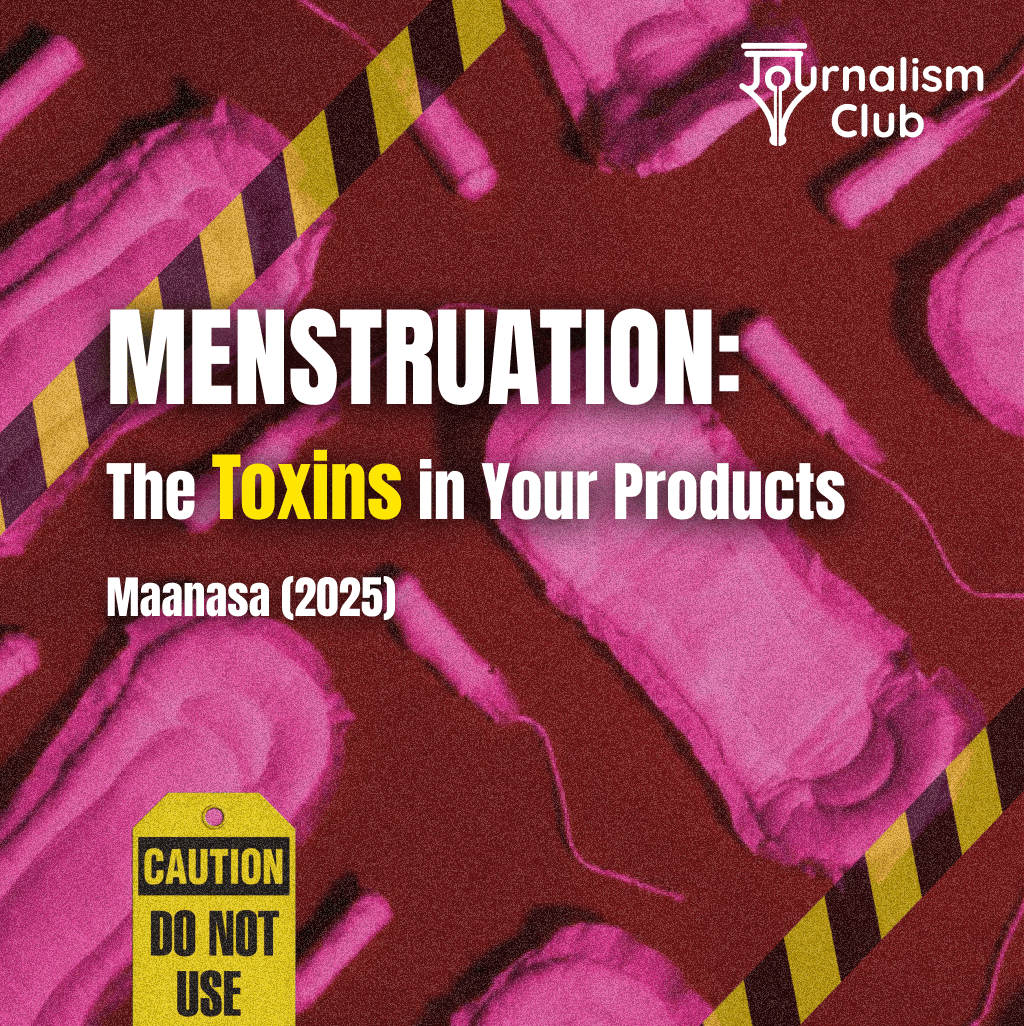
About 1.8 billion people menstruate every month. Yes, 1.8 billion. Yet it is taboo to talk about menstrual health and hygiene. Menstrual hygiene products are even less discussed. However, the products used by menstruators daily actually contain several substances that are harmful to the body.
Tampons and sanitary pads contain plastics and harmful chemicals such as phthalates, volatile organic compounds, parabens, metals and so on, and studies have shown that they can have some terrible effects on the body.
Several of these compounds are endocrine disruptors. In simple terms, it means that they interfere with the body’s natural hormones, leading to issues like infertility. The effects aren’t limited to reproductive health alone. They can cause type 2 diabetes, cardiovascular issues, endometriosis, and an increased risk of cancer as well. Phthalate exposure has also been linked to pregnancy complications, which means future generations are in danger because of the substances in today’s products. Exposure through the thin skin and mucous membranes of the body causes these chemicals to be readily absorbed directly into the bloodstream.
VOCs, or volatile organic compounds, are added to sanitary pads as fragrances and adsorbents. This can lead to skin inflammation and irregularities in the menstrual cycle as well.
What are the safer alternatives? Studies have shown that menstrual cups are safe to use, although this area could benefit from more research.
‘Organic’ products available in the market may contain fewer chemicals, and would do the environment a favour,but they do contain some of the metals present in conventional products such as lead, arsenic and cadmium. The concentrations of these are low, but further studies have to be done to analyse their impacts. There are no clinical studies indicating the superiority of these products over conventional ones in the market.
However, there’s another side to this that some of us don’t even realise— some people don’t have access to menstrual health products, let alone healthier alternatives simply because they are way too expensive. The average Indian menstruator spends about Rs. 200 per month on menstrual products. It is important to realise that this is out of reach for a lot of people in our country. According to an article from the New Indian Express, 1 in every 5 girls in India drops out of school because of lack of awareness and access to the required products. Lots of girls do not know what’s happening when they get their first period, what to do and most importantly, that it is completely normal.
Another serious condition that is worth talking about, although rare, with 0.03 to 0.5 cases per 100,000 people, is toxic shock syndrome. It is a bacterial disease that is caused due to improper usage of internal menstrual products such as tampons and menstrual cups. If serious, it can lead to multi organ failure, making it life threatening. However, it is entirely preventable if proper hygiene is taught and maintained.
In India, there are no stringent rules in place to check the contents of sanitary napkins. Manufacturers are not required to specify the contents of their products on the packaging, nor to test for the toxic effects of the chemicals in them. It is, however, imperative that these rules be made stricter, so that we can be more aware of what our bodies are being exposed to and find safer alternatives. Although studies are being conducted, there is still a gap when it comes to research on menstrual hygiene products, and it is time we bridge it.
In the US, the Food and Drug Administration classifies menstrual products as class II medical devices. However, there is no disclosure requirement for manufacturers to mention the ingredients used in their products. The EU and UK don’t have strict rules to ensure proper testing for dangerous substances in these products either.
Menstruation remains a taboo topic for a lot of people. What we fail to realise is that it is a natural process and nothing to be ashamed of. In fact, it is important that we educate ourselves about the topic, and understand the difficulties experienced by menstruators around the world. The euphemism ‘that time of the month’ does not do justice to the people who undergo menstruation every month. It is a very real process, and being asked to hide it doesn’t make it any easier.
Here are some useful resources for more information:
https://genderpolicyreport.umn.edu/tampon-safety-the-need-for-action/
https://euverify.com/resource/menstrual-products-medical-devices-eu
https://bangaloremirror.indiatimes.com/opinion/you/menstruation-money/articleshow/93886838.cms
https://girlpowertalk.com/the-hidden-economic-social-costs-of-menstruation/


Leave a Reply